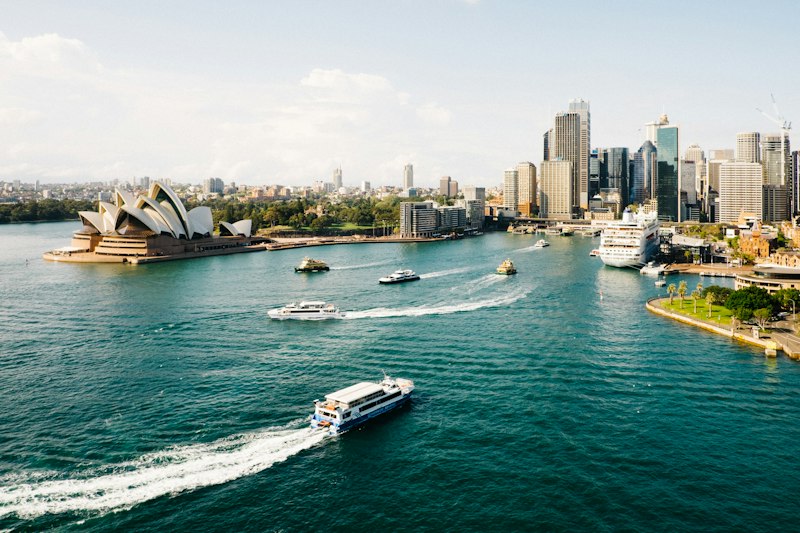
Complete breakdown of monthly expenses, salaries by profession, Australian tax system, Medicare, superannuation, and PPP calculator. For expats and newcomers planning to move to Australia.
Last updated: June 28, 2026 | Next review: December 2026
Monthly Living Expenses in Australia (Mid-size City)
For a couple (2 adults). All amounts in AUD. Based on ABS, real 2026 data, and expat reports.
Important: These figures are monthly expenses (after-tax spending). To earn this take-home, you need a higher gross salary. For example, to spend 3,800 AUD/month, you need roughly 5,500 AUD gross (~30% effective tax). See the Tax Structure tab for details.
~3,800
AUD/month (low)
Frugal couple in mid-size city
~6,200
AUD/month (high)
Comfortable lifestyle
~5,500
AUD avg gross needed
Gross salary to cover low-end expenses
~85,000
AUD avg annual salary
Australia-wide median gross
Category
Item
Low (AUD)
High (AUD)
Notes
Housing
Rent (1-bedroom apartment)
1,600
2,800
Sydney/Melbourne much higher; includes strata in some cases
Utilities (electricity, gas, water)
200
350
Electricity expensive; consider solar panels
Internet (NBN)
70
100
Telstra, Optus, TPG, Aussie Broadband
Mobile phones (2 SIMs)
60
100
Boost, Aldi Mobile, Belong, Optus prepaid
Housing subtotal
1,930
3,350
Food & Groceries
Groceries (2 adults)
600
1,000
Woolworths, Coles, Aldi; farmers markets for fresh produce
Free for citizens/PRs; funded via Medicare Levy (2% of income)
Private health insurance
200
400
Avoids Medicare Levy Surcharge (1-1.5%) for higher earners
Healthcare subtotal
200
400
Personal & Lifestyle
Clothes
100
200
Personal care
80
120
Haircuts, toiletries, sunscreen
Sport & leisure
60
120
Gym 50-80 AUD/month; outdoor activities often free
Household supplies
50
80
Cleaning products, small items
Personal subtotal
290
520
TOTAL MONTHLY EXPENSES
~3,370
~5,820
Realistic range: 3,800 - 6,200 with buffer
Salaries by Profession in Australia
Annual gross salaries in AUD. Data from ABS, Seek, Glassdoor 2026.
Superannuation: On top of your salary, employers must contribute 12% super (2025-26). This is NOT deducted from your pay -- it's paid in addition to your gross salary into your super fund. The figures below show base salary only.
Doctor
200,000 AUD
Mining Engineer
150,000 AUD
University Professor
140,000 AUD
Data Scientist
130,000 AUD
Lawyer
130,000 AUD
Software Engineer
120,000 AUD
Marketing Manager
100,000 AUD
Pharmacist
100,000 AUD
Architect
95,000 AUD
Electrician
90,000 AUD
Civil Servant
90,000 AUD
Teacher
85,000 AUD
Accountant
85,000 AUD
Police Officer
85,000 AUD
Nurse
80,000 AUD
Bus Driver
65,000 AUD
Chef
58,000 AUD
Retail Worker
50,000 AUD
Minimum wage (2025-26): Australia's national minimum wage is $24.10/hour, approximately $45,900/year gross for a 38-hour week. Australia has one of the highest minimum wages in the world. Reviewed annually by the Fair Work Commission.
Australian Tax System
Australia uses a progressive income tax plus Medicare Levy. Updated for 2025-26 tax year.
Income Tax Brackets (2025-26)
Annual Taxable Income (AUD)
Tax Rate
Notes
0 - 18,200
0%
Tax-free threshold
18,201 - 45,000
16%
Stage 3 tax cuts (from 19%)
45,001 - 135,000
30%
Middle bracket
135,001 - 190,000
37%
Upper bracket
190,001+
45%
Top marginal rate
Additional Levies & Contributions
Levy / Contribution
Rate
Who Pays
Notes
Medicare Levy
2%
All taxpayers above threshold
Funds public healthcare; low-income exemptions available
Medicare Levy Surcharge (MLS)
1% - 1.5%
Singles earning 93,000+ without private hospital cover
1% (93k-108k), 1.25% (108k-144k), 1.5% (144k+); avoid by getting private health
HECS-HELP Repayments
1% - 10%
Those with student loan debt
Compulsory repayments start at $54,435 income; rate increases with income
Superannuation (employer)
12%
Employer pays on top of salary
Not deducted from your pay; goes to super fund for retirement
Net Salary Calculator
Quick Reference: Net Pay by Gross
Annual Gross
Income Tax
Medicare Levy
Net Annual
Net Monthly
Effective Rate
50,000
5,092
1,000
43,908
3,659
12.2%
85,000
15,592
1,700
67,708
5,642
20.3%
120,000
26,092
2,400
91,508
7,626
23.7%
150,000
37,642
3,000
109,358
9,113
27.1%
200,000
56,142
4,000
139,858
11,655
30.1%
Purchasing Power Parity (PPP) Calculator
Compare how far your Australian salary goes in other countries. Based on World Bank/OECD 2025-2026 PPP indices. Australia = 100.
Country
Currency
PPP Index
Region
5,000 AUD buys equiv. of
How to read: Australia = 100. If India has a PPP index of 23, your 5,000 AUD in Australia has the same purchasing power as 5,000 x (23/100) = 1,150 AUD in India. You'd need ~77% less money in India for the same standard of living.
Cost of Living by City
Comparing major Australian cities. Sydney = 100 (most expensive baseline). Data: ABS, Domain, Numbeo 2026.
City
Avg Rent 1-bed (AUD/wk)
Weekly Transport
Meal Out (AUD)
Coffee (AUD)
Livability Note
Sydney
550-750
50 (Opal)
20-35
5.50
Most expensive; harbour, beaches, high salaries
Melbourne
450-650
45 (Myki)
18-30
5.00
Cultural capital; great food scene; variable weather
Note: Australian rents are typically quoted per week, not per month. To get monthly rent, multiply by 52 and divide by 12 (or roughly multiply by 4.33). Sydney and Melbourne have the tightest rental markets with vacancy rates below 1%.
Australian Healthcare System (Medicare)
Australia has a universal public healthcare system called Medicare, supplemented by optional private health insurance.
2%
Medicare Levy
Deducted from taxable income; funds public healthcare
Medicare-subsidised sessions per year via Mental Health Plan
Medicare vs Private Health Insurance
Feature
Medicare (Public)
Private Health Insurance
Eligibility
Citizens & permanent residents automatically
Anyone can purchase; encouraged for higher earners
Cost
2% Medicare Levy on taxable income
$100-400+/month depending on cover level
GP visits
Free if bulk-billed; gap payment otherwise
Usually covered under extras; choice of doctor
Hospital
Free as public patient; no choice of doctor
Private room, choose your doctor, shorter waits
Dental
Not covered (except children's dental benefit)
Covered under extras; annual limits apply
Optical/Physio
Limited coverage
Covered under extras policies
MLS avoidance
N/A
Having hospital cover avoids 1-1.5% MLS for high earners
Key Healthcare Facts
Service
Cost
Notes
GP visit (bulk-billed)
Free
Increasingly hard to find; many GPs charge $40-80 gap
GP visit (non-bulk-billed)
$40-80 gap
Medicare rebate covers ~$40; you pay the difference
Specialist visit
$100-300 gap
Referral from GP required; long waits in public system
Emergency department
Free
Always free for emergencies; can have long waits
PBS prescription
$31.60 co-pay
Per script; concession card holders pay $7.70
Mental Health Plan
10 sessions/year
GP creates plan; Medicare rebates for psychologist sessions
Ambulance
$400-1,200+
Free in QLD & TAS; must have ambulance cover in other states
Dental (adult)
Not covered
$200-500 for check-up + clean; private extras cover recommended
Lifetime Health Cover (LHC) loading: If you don't take out private hospital cover by July 1 following your 31st birthday, you'll pay a 2% loading on top of your premium for every year you're over 30. This is permanent and can make private health very expensive later. Consider getting hospital cover before turning 31.
Housing in Australia
The Australian rental market is highly competitive, especially in Sydney and Melbourne. Understanding the process is essential.
Key Terms
Term
Explanation
Bond
Security deposit; typically 4 weeks rent. Held by state bond authority (not landlord). Returned at end of lease minus any damage.
Rent in advance
Usually 2 weeks rent paid upfront at lease signing
Condition report
Detailed report of property condition at move-in. Fill it in carefully and note ALL existing damage -- protects your bond at move-out.
Lease term
Usually 6 or 12 months; break lease fees apply if leaving early (typically 4-6 weeks rent)
Strata
Body corporate fees for apartments; usually paid by owner but affects rent pricing
Negative gearing
Tax benefit for property investors; landlord can claim rental losses against income. Controversial policy affecting housing affordability.
Rental crisis
Vacancy rates below 1% in most capitals; high competition; apply fast with strong references
Where to Search
Platform
Type
Notes
Domain.com.au
All types
Major property platform; good filters and suburb profiles
realestate.com.au
All types
Largest property site in Australia; most listings
Flatmates.com.au
Shared housing
Best for finding share houses and flatmates
Fairy Floss Real Estate (Facebook)
Rooms/shares
Popular Facebook groups for rentals in each city
Gumtree.com.au
All types
Classifieds; some private landlord listings; beware scams
Application tips: In the current rental crisis, prepare a strong application: (1) Cover letter introducing yourself and your situation. (2) References from previous landlords or employers. (3) Proof of income (payslips, employment contract). (4) Photo ID. (5) Rental history/ledger from previous tenancy. Apply fast -- good properties are gone within days. Offer to pay more rent or a longer lease to stand out.
Transport in Australia
Australia is car-dependent outside major CBDs, but capital cities have decent public transport networks.
Left
Side of road
Australians drive on the left side
~$2.00
AUD/litre petrol
Fluctuates; use FuelCheck apps to find cheapest
$50
Opal weekly cap
Sydney; capped at 8 paid journeys per week
$800-1,200
AUD annual rego
Vehicle registration; varies by state and vehicle
Public Transport by City
City
Card System
Covers
Weekly Cap (AUD)
Notes
Sydney
Opal
Trains, buses, ferries, light rail
~$50
Half-price after 8 journeys; Sunday $2.80 cap
Melbourne
Myki
Trams, trains, buses
~$46
Free tram zone in CBD; extensive tram network
Brisbane
Go Card
Buses, trains, ferries
~$40
Zone-based; includes Gold Coast light rail
Perth
SmartRider
Trains, buses, ferries
~$42
Free transit zone in CBD; expanding Metro
Adelaide
Metrocard
Buses, trams, trains
~$35
Free city tram; compact CBD
Canberra
MyWay
Buses, light rail
~$38
Car-dependent city; light rail expanding
Driving Costs
Item
Cost (AUD)
Notes
Vehicle registration (rego)
$800-1,200/year
Includes CTP insurance; varies by state and vehicle type
Sydney has extensive tolls (M2, M5, Harbour Bridge/Tunnel, WestConnex)
Toll roads (Melbourne)
$5-12/trip
CityLink, EastLink; need e-tag or pay within 3 days
Petrol
~$2.00/litre
Use PetrolSpy or FuelCheck apps for cheapest prices
Parking (CBD)
$20-60/day
Very expensive in Sydney/Melbourne CBD; use park & ride
Pro tip: If you have an overseas licence, most states allow you to drive on it for 3-6 months. After that, you must get an Australian licence. Some countries have reciprocal agreements (UK, Canada, Ireland, etc.) allowing direct licence transfer without a test. Check your state's transport authority (Service NSW, VicRoads, TMR QLD, etc.).
Working in Australia
Australian workplace rights, employment types, and practical info for newcomers.
20
Annual leave days/year
4 weeks paid leave (full-time permanent)
10
Sick/carer's leave days
Personal/carer's leave per year (permanent)
12%
Superannuation
Employer contribution on top of salary (2025-26)
20 weeks
Paid parental leave
Government-funded at minimum wage
Topic
Details
Notes
Fair Work Act
Governs all employment in Australia
Sets minimum pay, conditions, unfair dismissal protections. fairwork.gov.au is the key resource.
6 months (large employer) or 12 months (small business); apply to Fair Work Commission
Work Culture Tips
Australian work culture essentials: (1) Casual & egalitarian -- first names are standard from day one; calling your boss "mate" is normal. (2) Work-life balance -- Australians value their weekends, sport, and outdoor time. Don't expect replies to emails after 5pm. (3) Smoko -- the traditional morning/afternoon tea break is still a thing. (4) Tall poppy syndrome -- don't be too boastful; humility and self-deprecating humour are valued. (5) Friday arvo drinks -- many workplaces have casual Friday afternoon drinks; good for networking.
Aussie Basics & Essential Info
Slang, essential registrations, and cultural quirks every newcomer needs to know.
Aussie Slang
Slang
Meaning
Example
Arvo
Afternoon
"See you this arvo" = See you this afternoon
Brekkie
Breakfast
"Let's grab brekkie" = Let's get breakfast
Servo
Service station / petrol station
"Stop at the servo for fuel"
Ute
Utility vehicle / pickup truck
Very popular in Australia; Ford Ranger, Toyota Hilux
Thongs
Flip-flops / sandals
NOT underwear. "Grab your thongs, we're going to the beach"
Esky
Cooler / ice box
"Chuck the beers in the esky"
Mate
Friend / anyone
Universal term; can be friendly or aggressive depending on tone
No worries
You're welcome / it's fine
The most Australian phrase ever
Barbie
Barbecue
"Throw a snag on the barbie" = Cook a sausage on the BBQ
Reckon
Think / believe
"I reckon it'll be 35 degrees today"
Bottle-o
Liquor store / bottle shop
"Grab some tinnies from the bottle-o"
Maccas
McDonald's
Even McDonald's uses this name in Australian marketing
Essential Registrations
Registration
What It Is
How to Get It
TFN (Tax File Number)
Your unique tax identity number
Apply online at ato.gov.au; free; takes 10-28 days. MANDATORY for employment.
ABN (Australian Business Number)
For freelancers / contractors
Apply at abr.gov.au; free; instant if eligible. Needed for invoicing as sole trader.
Medicare card
Access to public healthcare
Apply at Services Australia office with visa/citizenship proof. Needed for bulk billing.
MyGov
Government services portal
Create account at my.gov.au; links ATO, Medicare, Centrelink, My Health Record.
Centrelink
Government welfare/payments agency
For JobSeeker, family payments, parental leave. Apply via MyGov.
Bank account
Local banking
CBA, Westpac, ANZ, NAB (Big 4); or digital banks like Up, ING, Macquarie
Cultural Essentials
Things to know: (1) Tipping is not expected -- staff are paid proper wages. Rounding up or 10% at a nice restaurant is generous but not required. (2) Sunscreen culture -- Australia has the highest skin cancer rate globally. Slip, Slop, Slap (slip on a shirt, slop on sunscreen, slap on a hat) is drilled into every Aussie from childhood. SPF 50+ is standard. (3) Drop bears -- Australians will tell newcomers about "drop bears" (aggressive koalas that drop from trees). This is a joke. Regular koalas are real and mostly harmless (but can scratch). (4) Everything can kill you -- spiders, snakes, jellyfish, sharks, crocodiles -- yes, but deaths are extremely rare. Shake your shoes before putting them on, and you'll be fine. (5) Bunnings sausage sizzle -- the cultural institution of buying a $3.50 sausage in bread from the hardware store on weekends.
Minimum Earnings to Survive in Australia
What gross salary do you need? Here's the realistic breakdown for 2026.
~65,000
AUD/year gross (single)
Comfortable living in mid-size city
~100,000
AUD/year gross (couple)
Combined income, mid-size city
~3,800
AUD/month net minimum
Bare minimum for couple (frugal)
~5,500
AUD/month recommended
Comfortable net for couple with buffer
Lifestyle
Monthly Expenses (AUD)
Gross Salary Needed (AUD)
Net After Tax
Buffer
Survival mode Share house, very frugal
2,200
35,000
2,500
+300
Basic single Own studio outside CBD
3,200
55,000
3,600
+400
Couple (mid-size city) 2 adults, comfortable
4,500
85,000
5,600
+1,100
Couple (Sydney/Melbourne) 2 adults, good lifestyle
6,200
120,000
7,600
+1,400
Family with child 2 adults + 1 child, capital city
7,500
140,000
8,800
+1,300
Newcomer checklist (first 2 weeks): (1) Apply for a TFN at ato.gov.au (do this immediately -- takes up to 28 days). (2) Open a bank account (CBA, Westpac, ANZ, NAB, or digital: Up, ING). (3) Apply for a Medicare card at Services Australia office. (4) Get a mobile SIM (Boost, Aldi Mobile, Belong -- all use Telstra network). (5) Find accommodation (realestate.com.au, Domain, Flatmates). (6) Create a MyGov account and link your services. (7) Get an Opal/Myki/Go Card for public transport. (8) Buy sunscreen -- seriously.
Data note: All figures updated June 2026. Rents, salaries, and tax brackets change annually. Always verify current rates with official sources (ATO, Fair Work Commission, ABS, Services Australia) before making financial decisions.