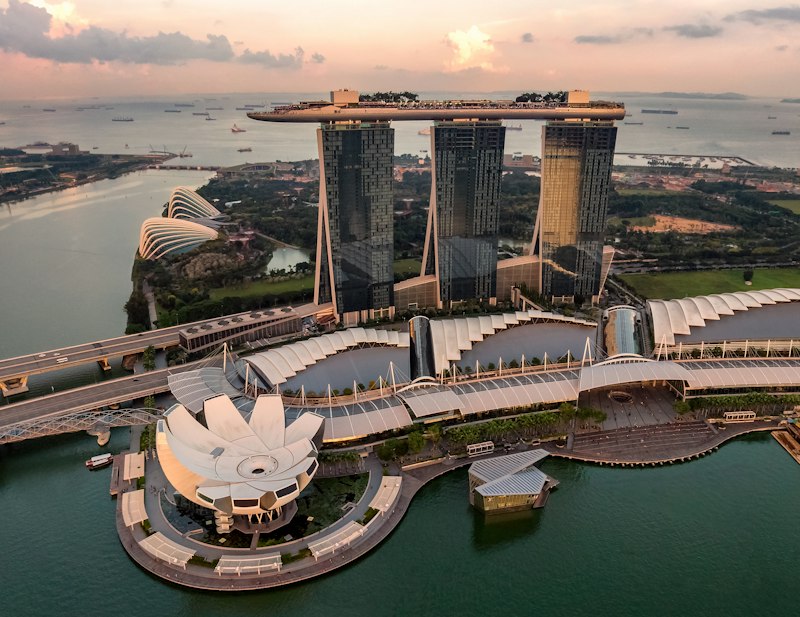
Complete breakdown of monthly expenses, salaries by profession, Singapore tax system, CPF, healthcare, and PPP calculator. For expats and newcomers planning to move to the Lion City.
Last updated: June 28, 2026 | Next review: December 2026
Monthly Living Expenses in Singapore (Couple)
For a couple (2 adults). All amounts in SGD. Based on MOM data, real 2026 figures, and expat reports.
Important: These figures are monthly expenses (after-tax spending). Singapore has very low income tax compared to most developed countries. Hawker food is incredibly affordable, but rent and car ownership are among the world's most expensive. See the Tax Structure tab for details.
~4,500
SGD/month (low)
Frugal couple in HDB flat
~8,500
SGD/month (high)
Comfortable condo lifestyle
~6,500
SGD gross needed
Gross salary to cover mid-range expenses
~78,000
SGD avg annual
Singapore median gross salary
Category
Item
Low (SGD)
High (SGD)
Notes
Housing
Rent - HDB 1-bedroom
2,000
3,000
HDB flats are most common; location matters hugely
Rent - Condo 1-bedroom
3,000
5,000+
Pool, gym, security; Orchard/CBD area at top end
Utilities (electricity, water, gas)
150
300
Air-con is the biggest cost; SP Group is main provider
Internet
40
60
Singtel, StarHub, M1; fibre widely available
Mobile phones (2 SIMs)
40
80
Singtel, StarHub, M1, MVNOs like Circles.Life, GIGA
Monthly gross salaries in SGD. Data from MOM, Glassdoor, PayScale 2026.
AWS (Annual Wage Supplement): Many Singapore employers pay a 13th month salary, known as the AWS. This is customary but not mandatory. Some companies also offer performance bonuses of 1-6 months. The figures below show standard monthly gross.
Doctor
15,000 SGD
University Professor
12,000 SGD
Lawyer
10,000 SGD
Data Scientist
9,000 SGD
Software Engineer
8,000 SGD
Chemical Engineer
7,000 SGD
Marketing Manager
7,000 SGD
Architect
6,000 SGD
Accountant
5,500 SGD
Pharmacist
5,500 SGD
Teacher
5,000 SGD
Civil Servant
5,000 SGD
Nurse
4,000 SGD
Police Officer
4,000 SGD
Chef
3,200 SGD
Electrician
3,000 SGD
Bus Driver
2,500 SGD
Retail Worker
2,200 SGD
No minimum wage (mostly): Singapore does not have a universal minimum wage. However, the Progressive Wage Model (PWM) sets minimum wages for specific sectors: cleaning, security, landscape, retail, food services, and waste management. Wages start from ~$1,400-1,600/month for entry-level PWM roles.
Singapore Tax System
Singapore has one of the lowest income tax rates in the developed world. Progressive system with generous exemptions. Updated for YA 2026.
Income Tax Brackets (Resident Individuals)
Chargeable Income (SGD)
Tax Rate
Notes
0 - 20,000
0%
First $20K is tax-free
20,001 - 30,000
2%
Tax on next $10K = $200
30,001 - 40,000
3.5%
Tax on next $10K = $350
40,001 - 80,000
7%
Tax on next $40K = $2,800
80,001 - 120,000
11.5%
Tax on next $40K = $4,600
120,001 - 160,000
15%
Tax on next $40K = $6,000
160,001 - 200,000
18%
Tax on next $40K = $7,200
200,001 - 240,000
19%
Tax on next $40K = $7,600
240,001 - 280,000
19.5%
Tax on next $40K = $7,800
280,001 - 320,000
20%
Tax on next $40K = $8,000
320,001+
22%
Top marginal rate
CPF Contributions (Central Provident Fund)
Component
Employee
Employer
Total
Notes
CPF (age 55 and below)
20%
17%
37%
For Singapore citizens and PRs only; foreigners exempt
CPF (age 55-60)
15%
14.5%
29.5%
Reduced rates for older workers
CPF (age 60-65)
9.5%
11%
20.5%
Further reduced
CPF Ordinary Wage ceiling
$6,800/month
CPF contributions capped at this amount
Other Taxes
Tax
Rate
Notes
GST (Goods & Services Tax)
9%
Applied to most goods and services
Capital gains tax
0%
No capital gains tax in Singapore
Inheritance / estate tax
0%
Abolished since 2008
Dividend tax
0%
One-tier corporate tax system; no dividend tax
Non-resident tax rate
15% or resident rate
Whichever is higher; for employment income
Net Salary Calculator
Quick Reference: Net Pay by Gross
Monthly Gross
Annual Gross
Tax + CPF
Net Monthly
Effective Rate
4,000
48,000
~1,000
~3,000
25.0%
6,000
72,000
~1,500
~4,500
25.0%
8,000
96,000
~1,900
~6,100
23.8%
10,000
120,000
~2,200
~7,800
22.0%
15,000
180,000
~3,100
~11,900
20.7%
Note: CPF (20% employee share) is technically not a tax -- it goes into your personal retirement/housing/healthcare savings accounts. For citizens/PRs, the effective "tax" rate is very low (often under 5%). Foreigners on EP/S Pass pay no CPF, so their take-home is even higher.
Purchasing Power Parity (PPP) Calculator
Compare how far your Singapore salary goes in other countries. Based on World Bank/OECD 2025-2026 PPP indices. Singapore = 100.
Country
Currency
PPP Index
Region
5,000 SGD buys equiv. of
How to read: Singapore = 100. If India has a PPP index of 21, your 5,000 SGD in Singapore has the same purchasing power as 5,000 x (21/100) = 1,050 SGD in India. You'd need ~79% less money in India for the same standard of living.
Cost of Living by Area / District
Comparing major areas in Singapore. Orchard/CBD = most expensive baseline. Data: PropertyGuru, 99.co, Numbeo 2026.
Area
Avg Rent 1-bed (SGD)
Meal at Hawker (SGD)
Coffee (SGD)
Lifestyle Notes
Orchard / CBD
3,500-5,500
5-8
6-8
Most expensive; luxury shopping, business district, expat hub
Marina Bay
3,200-5,000
5-7
5-7
Iconic skyline; Gardens by the Bay; upscale living
Tiong Bahru
2,500-3,800
3.50-5
5-7
Hipster cafes, heritage shophouses, trendy but charming
Jurong
1,800-2,800
3-4.50
2-4
West side; Jurong Lake District developing; more affordable
Tampines
1,800-2,800
3-4.50
2-4
East side; large HDB town; family-friendly; good amenities
Woodlands
1,500-2,500
3-4
1.50-3
North; near JB (Malaysia) border; most affordable; improving MRT
Kopi vs coffee: A traditional "kopi" at a hawker centre costs $1.20-2.00, while a latte at a cafe costs $5-8. Living in heartland areas (Jurong, Tampines, Woodlands) can save you 30-50% on rent compared to Orchard/CBD, with MRT access keeping commute times manageable.
Singapore Healthcare System
Singapore uses a hybrid public-private system built on the "3M" framework: Medisave, MediShield Life, and Medifund.
3M
Framework
Medisave + MediShield Life + Medifund
$10-20
SGD polyclinic visit
Subsidized for citizens; PRs pay slightly more
Top 10
World ranking
WHO ranks Singapore among the best healthcare systems
CHAS
Subsidy card
Community Health Assist Scheme for lower/middle income
The 3M Healthcare Framework
Component
What It Is
Who It Covers
Details
Medisave
Mandatory medical savings account
Citizens & PRs
Part of CPF (8-10.5% of salary goes to Medisave); can be used for hospitalization, approved outpatient treatments, insurance premiums
MediShield Life
Basic health insurance
All citizens & PRs (mandatory)
Covers large hospital bills and expensive outpatient treatments; premiums paid via Medisave; lifetime coverage
Medifund
Safety net endowment fund
Needy citizens
Government safety net for those who cannot afford bills even after Medisave + MediShield
Integrated Shield Plans (IP)
Private insurance top-up
Optional for citizens & PRs
Offered by private insurers (AIA, Prudential, Great Eastern); upgrades to private hospital / Class A wards
Healthcare Costs
Service
Cost (SGD)
Notes
Polyclinic visit (citizen)
10-20
Government-run; subsidized; need to queue or book online
Polyclinic visit (PR)
20-40
Less subsidized than citizens
GP visit (private clinic)
30-80
No referral needed; faster but more expensive
Specialist visit (public)
30-100
Referral from polyclinic needed for subsidy
A&E (public hospital)
100-200
Emergency department; additional charges for treatment
Hospital stay (subsidized ward)
50-200/day
Class B2/C wards heavily subsidized for citizens
Hospital stay (private)
500-2,000/day
Mount Elizabeth, Gleneagles, Raffles Hospital
Dental - basic check-up
40-80
Cleaning and check-up; polyclinics cheaper
Dental - filling
60-200
Depends on material and clinic type
Pioneer & Merdeka Generation: Seniors from the Pioneer Generation (born before 1950, received citizenship by 1987) and Merdeka Generation (born 1950-1959) receive additional healthcare subsidies, including outpatient care discounts at polyclinics, top-ups to Medisave, and premium subsidies for MediShield Life.
For expats/foreigners: You are NOT covered by MediShield Life or Medisave. You must get private health insurance. Many employers provide group insurance. Without insurance, a hospital stay can cost thousands. Always verify your coverage before arriving.
Housing in Singapore
Housing is the single biggest expense in Singapore. Understanding HDB, condos, and stamp duty is essential.
Housing Types
Type
Who Can Buy
Price Range
Details
HDB Flat (BTO)
Citizens only (new)
$300K - $600K+
Build-To-Order; 99-year lease; subsidized; long wait (3-5 years); ballot system
HDB Flat (Resale)
Citizens & PRs
$400K - $1M+
Immediate availability; CPF housing grants available for citizens
Condominium
Anyone (including foreigners)
$1M - $5M+
99-year or freehold; pool, gym, security; ABSD applies
Landed Property
Citizens only (restricted)
$3M - $30M+
Terraced, semi-D, bungalow; foreigners need special approval from SLA
Rental (HDB room)
Anyone
$800 - $1,500/mo
Renting a room in an HDB flat; common for singles/students
Rental (whole HDB)
Anyone
$2,000 - $3,500/mo
Minimum 6-month lease for non-citizens
Rental (condo)
Anyone
$3,000 - $6,000+/mo
Popular with expats; usually 1-2 year lease
Stamp Duty (Buyer's Stamp Duty + ABSD)
Buyer Type
BSD
ABSD
Total Additional Cost
Singapore citizen (1st property)
Up to 6%
0%
BSD only
Singapore citizen (2nd property)
Up to 6%
20%
Significant penalty for 2nd home
PR (1st property)
Up to 6%
5%
Moderate additional cost
Foreigner (any property)
Up to 6%
60%
Extremely expensive! On a $1.5M condo, ABSD alone = $900K
Where to Search
Platform
Type
Notes
PropertyGuru.com.sg
All types
Largest property portal in Singapore; buy and rent
99.co
All types
Modern interface; good filters; popular with younger renters
SRX.com.sg
All types
Good for price data and market trends
Carousell Property
Rental / Resale
Peer-to-peer listings; sometimes direct from owner
Facebook groups
Room rental
"Singapore Room Rental" groups; verify in person before paying
Foreigners beware: The 60% Additional Buyer's Stamp Duty (ABSD) makes buying property in Singapore extremely expensive for foreigners. Most expats rent. If you're on Employment Pass, renting a condo or HDB room is the standard approach. Always check URA and HDB rules before signing anything.
Transport in Singapore
Singapore has world-class public transport but the most expensive car ownership anywhere on Earth.
Just for the RIGHT to own a car; valid 10 years; bidding system
ARF (Additional Registration Fee)
100% of OMV
Tax equal to the car's Open Market Value; doubles the price
ERP (Electronic Road Pricing)
$0.50-6.00/pass
Congestion pricing at gantries; varies by time and location
Cycling
Free (own bike)
Growing network of PCN (Park Connector Network); 300+ km of paths
E-scooter (PMD)
Restricted
Banned on footpaths since 2019; only allowed on cycling paths; must be registered
Car ownership reality: A Toyota Corolla that costs $25,000 USD in most countries will cost $150,000+ SGD in Singapore after COE, ARF, GST, and registration fees. Most Singaporeans use public transport or Grab. Unless you have a very specific need, do NOT buy a car in Singapore -- it is genuinely the most expensive place on Earth to own one.
Working in Singapore
Singapore's work culture, employment rights, and visa framework for foreigners.
14
Days annual leave
Minimum by law; increases with tenure (up to 21+)
11
Public holidays
Multi-ethnic: Chinese NY, Hari Raya, Deepavali, Christmas
16 weeks
Maternity leave
Government-paid for first 2 children; 12 weeks for 3rd+
63
Retirement age
Minimum retirement age; re-employment up to 68
Work Pass Framework
Pass Type
Min Salary
Who It's For
Key Details
Employment Pass (EP)
$5,600+/month
Professionals, managers, executives
COMPASS framework points-based; employer must sponsor; renewable
S Pass
$3,150+/month
Mid-skilled workers
Quota and levy apply to employer; max 10-18% of workforce
Work Permit
Varies
Semi-skilled workers
Source country restrictions; levy; specific sectors only
ONE Pass
$30,000+/month
Top talent
5-year pass; spouse can work; not tied to single employer
EntrePass
N/A
Entrepreneurs
For starting a business; must meet innovation/investment criteria
Dependant Pass (DP)
N/A
Spouse/children of EP/S Pass
DP holders need LOC (Letter of Consent) to work
Employment Rights
Topic
Details
Notes
Employment Act
Covers all employees except seafarers, domestic workers, and statutory board/civil servants
Part IV additional protections for workers earning up to $4,500/month
Working hours
Standard 44 hours/week (max 48 with OT)
Overtime pay at 1.5x for non-exempt employees
Annual leave
Minimum 7 days (1st year), increasing to 14 days (8th year)
Many companies offer 14-21 days from the start
Sick leave
14 days outpatient + 60 days hospitalization per year
Must be certified by company doctor or approved clinic
Employer pays first 8 weeks; government reimburses last 8 weeks
Paternity leave
2 weeks government-paid
For married fathers; child must be Singapore citizen
Notice period
Typically 1-3 months
Depends on contract; during probation usually 1 week - 1 month
CPF contributions
Employee 20% + Employer 17% (citizens/PRs under 55)
Foreigners do not contribute to CPF
COMPASS Framework
Points-based system for EP applications
Evaluates salary, qualifications, diversity, support for local employment; min 40 points
Work culture: (1) Meritocracy -- Singapore values performance and results; promotions are merit-based. (2) Long hours -- work culture can be intense; 50-60 hour weeks are common in finance and consulting. (3) Hierarchical -- respect for seniority; "face" culture matters. (4) Multi-cultural -- workplaces are diverse; English is the working language. (5) Networking -- guanxi (relationships) and connections matter; attend industry events.
Essential Singapore Terms & Culture
Singapore is a unique melting pot of Chinese, Malay, Indian, and Western cultures. Here's what you need to know.
Singlish Survival Guide
Singlish
Meaning
Example / Context
Lah
Emphasis particle (most iconic)
"Can lah!" = "Sure, no problem!"; softens or emphasizes statements
Can / Cannot
Yes / No (universal answer)
"Can you help?" "Can." -- the most Singaporean response possible
Shiok
Awesome, delicious, satisfying
"This laksa damn shiok!" = "This laksa is incredible!"
Kiasu
Fear of missing out / competitive
"So kiasu, queue 2 hours for new restaurant" -- a defining national trait
Chope
To reserve (usually a hawker seat)
Place tissue packet on table to "chope" your seat -- sacred unwritten rule
Makan
To eat (from Malay)
"Let's go makan" = "Let's go eat"
Paiseh
Embarrassed / shy / sorry
"Paiseh, can I squeeze through?" -- polite way to apologize
Atas
High-class / fancy / posh
"Wah, this restaurant very atas" = "This place is fancy"
Sian
Bored / tired / fed up
"Monday again, sian..." -- universal Monday mood
Bo jio
Didn't invite me!
"You go eat without me? Bo jio!" -- playful complaint
Key Acronyms & Terms
Term
Full Name
Why It Matters
HDB
Housing & Development Board
80% of Singaporeans live in HDB flats; government-built public housing
COE
Certificate of Entitlement
Bidding certificate to own a car; costs $100K+; valid 10 years
CPF
Central Provident Fund
Mandatory savings for retirement, housing, healthcare; 37% of salary
ERP
Electronic Road Pricing
Congestion charge system; gantries charge during peak hours
IRAS
Inland Revenue Authority of Singapore
Tax authority; file taxes via myTax Portal by April 18 each year
SingPass
Singapore Personal Access
Digital identity for all government e-services; essential for everything
NRIC / FIN
National Registration IC / Foreign ID Number
Your identity number; needed for everything from banking to healthcare
Work pass applications, employment disputes, labour laws
Cultural Rules & Fines
Singapore is a "fine" city (literally): (1) Chewing gum -- importing, selling, and distributing is banned (therapeutic gum from dentists is OK). (2) Littering -- $300 fine for first offence; repeat offenders face Corrective Work Orders. (3) Smoking -- banned in most public places; designated smoking areas only. (4) Jaywalking -- $50 fine; within 50m of a crossing. (5) Durian -- banned on MRT, buses, and most hotels (the smell!). (6) Eating/drinking on MRT -- $500 fine. These are enforced.
Hawker Culture (UNESCO Heritage)
Hawker centres are Singapore's soul: UNESCO-inscribed in 2020. Over 100 hawker centres island-wide serving incredible food at $3-6 per plate. Must-try: chicken rice, laksa, char kway teow, nasi lemak, roti prata, satay, bak kut teh. Always "chope" (reserve) your seat with a tissue packet. Tipping is NOT expected anywhere in Singapore -- not at hawkers, not at restaurants, not in taxis. Some restaurants add 10% service charge automatically.
Multi-Ethnic Society
Four official languages: English (working language), Mandarin, Malay (national language), Tamil. The population is roughly 74% Chinese, 13% Malay, 9% Indian, 3% others. Public holidays reflect all major ethnic and religious celebrations: Chinese New Year, Hari Raya Puasa, Hari Raya Haji, Deepavali, Christmas, Vesak Day. This diversity is a source of national pride and is reflected in the food, festivals, and daily life.
Minimum Earnings to Survive in Singapore
What gross salary do you need? Here's the realistic breakdown for 2026.
~60,000
SGD/year gross (single)
Comfortable living in HDB
~96,000
SGD/year gross (couple)
Two adults in HDB, mid-range lifestyle
~4,500
SGD/month minimum
Bare minimum for couple (frugal, HDB)
~6,500
SGD/month recommended
Comfortable net for couple with buffer
Lifestyle
Monthly Expenses (SGD)
Gross Salary Needed (SGD)
Net After Tax/CPF
Buffer
Survival mode HDB room rental, very frugal
2,500
3,500
2,800
+300
Basic single Own HDB rental, modest
3,500
5,000
4,000
+500
Couple (HDB, frugal) 2 adults, hawker food focus
4,500
6,500
5,200
+700
Couple (condo, comfortable) 2 adults, dining out regularly
8,500
11,000
8,800
+300
Family with child 2 adults + 1 child, condo
12,000
16,000
12,800
+800
Newcomer checklist (first 2 weeks): (1) Collect your NRIC (citizens) or FIN card (foreigners) from ICA. (2) Register for SingPass (singpass.gov.sg) -- your digital identity for all government services. (3) Open a bank account (DBS, OCBC, UOB are the big 3; bring passport + employment letter + proof of address). (4) Get a mobile SIM (Singtel, StarHub, M1, or MVNOs like Circles.Life). (5) Find accommodation via PropertyGuru or 99.co. (6) Get an EZ-Link card or set up SimplyGo for public transport. (7) Register with a GP / get health insurance sorted. (8) Explore your nearest hawker centre -- this is where life happens.
Data note: All figures updated June 2026. Rents, salaries, and tax brackets change annually. Always verify current rates with official sources (IRAS, MOM, CPF Board, HDB) before making financial decisions.