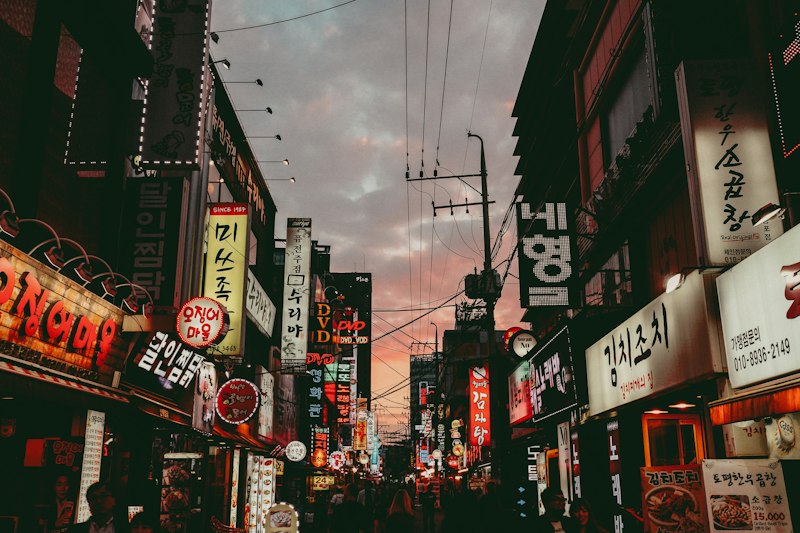
Complete breakdown of monthly expenses, salaries by profession, Korean tax system, healthcare, and PPP calculator. For expats and newcomers planning to move to South Korea.
Last updated: June 29, 2026 | Next review: December 2026
Monthly Living Expenses in South Korea (Seoul-based)
For a single adult. All amounts in KRW. Based on KOSIS, real 2026 data, and expat reports. Excludes jeonse (key money deposit) arrangements.
Important: These figures are monthly expenses (after-tax spending). Seoul is 20-35% more expensive than other cities. To earn this take-home, you need a higher gross salary. For example, to spend 2,000,000 KRW/month, you need roughly 2,600,000 KRW gross (~23% effective tax+social contributions). See the Tax Structure tab for details.
~1,500,000
KRW/month (low)
Frugal single in Seoul
~2,500,000
KRW/month (high)
Comfortable lifestyle in Seoul
~3,200,000
KRW avg gross needed
Gross salary to cover mid-range expenses
~3,800,000
KRW avg monthly salary
South Korea median gross monthly
Category
Item
Low (KRW)
High (KRW)
Notes
Housing
Rent (1-bedroom, wolse)
600,000
1,200,000
600K outskirts/officetel; 900K-1.2M Gangnam/Hongdae areas
Internet (fiber)
20,000
40,000
KT, SK Broadband, LG U+; world's fastest internet
Mobile phone (1 SIM)
30,000
70,000
Budget MVNOs 30K; SKT, KT, LG U+ premium plans 50-70K
Utilities (gas, electric, water)
100,000
200,000
Higher in winter (ondol floor heating); summer AC adds cost
Housing subtotal
750,000
1,510,000
Food & Groceries
Groceries
400,000
600,000
E-Mart, Homeplus budget; Lotte Mart, SSG premium
Eating out
200,000
400,000
Kimbap 3-4K; bibimbap 8-10K; Korean BBQ 15-25K/person
Food subtotal
600,000
1,000,000
Transport
T-money transit card (subway + bus)
55,000
65,000
Seoul Metro base fare 1,400 KRW; free bus transfers within 30min
Occasional taxi
0
50,000
Base fare 4,800 KRW; Kakao Taxi app widely used
Transport subtotal
55,000
115,000
Health Insurance
National Health Insurance (NHI)
80,000
150,000
~3.545% of income (employee share); employer matches
Health subtotal
80,000
150,000
Personal & Lifestyle
Clothes
50,000
150,000
Zara, Uniqlo, Daiso budget; Korean fashion brands higher
Realistic range: 1,500,000 - 2,500,000 with buffer
Salaries by Profession in South Korea
Monthly gross salaries in KRW. Data from KOSIS, JobKorea, Saramin, Glassdoor 2026.
Bonus culture: Many Korean companies pay bonuses ranging from 100-400% of monthly salary annually, often split across quarters or given as performance bonuses. The figures below show standard monthly gross excluding bonuses. Large chaebols (Samsung, Hyundai, LG) tend to offer the highest total compensation packages.
Doctor (specialist)
12,000,000+ KRW
Investment Banker
10,000,000 KRW
Lawyer (attorney)
9,000,000 KRW
Software Engineer (senior)
7,000,000 KRW
Doctor (general)
6,000,000 KRW
Data Scientist
5,500,000 KRW
Pharmacist
5,000,000 KRW
Software Engineer (mid)
4,500,000 KRW
Marketing Manager
4,200,000 KRW
Teacher (public school)
4,000,000 KRW
Accountant
3,800,000 KRW
Nurse
3,500,000 KRW
Office Worker (average)
3,200,000 KRW
English Teacher (hagwon)
2,800,000 KRW
Retail / Service Staff
2,300,000 KRW
Part-time (alba)
1,800,000 KRW
Minimum wage (2026): South Korea's minimum wage is ~10,030 KRW/hour (reviewed annually). Approximately 2,096,270 KRW/month gross for full-time (209 hours). Minimum wage is the same across all regions, unlike Japan.
Korean Tax System (sogeutkse)
South Korea uses progressive national income tax plus local income tax and mandatory social insurance. Updated for 2026 tax year.
National Income Tax Brackets
Annual Taxable Income (KRW)
Tax Rate
Cumulative Tax (KRW)
0 - 14,000,000
6%
840,000
14,000,001 - 50,000,000
15%
6,240,000
50,000,001 - 88,000,000
24%
15,360,000
88,000,001 - 150,000,000
35%
37,060,000
150,000,001 - 300,000,000
38%
94,060,000
300,000,001 - 500,000,000
40%
174,060,000
500,000,001 - 1,000,000,000
42%
384,060,000
1,000,000,001+
45%
-
Additional Taxes
Tax
Rate
Who Pays
Notes
Local income tax (jibang sogeuktse)
10%
All taxpayers
10% of national income tax amount (not income); effectively adds ~0.6-4.5% to effective rate
VAT (bugagachise)
10%
Everyone
Flat 10% on goods and services; included in displayed prices
Social Insurance (4 Major Insurances) - Employee Share
Contribution
Total Rate
Employee Share
Employer Share
Notes
National Health Insurance (NHI)
7.09%
3.545%
3.545%
Includes long-term care insurance; covers 70% of medical costs
National Pension Service (NPS)
9.0%
4.5%
4.5%
Retirement pension; foreigners from certain countries can claim refund on departure
Employment Insurance
1.8%
0.9%
0.9%
Covers unemployment benefits and job training
Industrial Accident Insurance
~1.0%
0%
~1.0%
Fully employer-paid; covers workplace injuries
Year-end tax settlement (yeonmal jeongsang): Every February, Korean employees go through year-end tax settlement -- essentially an automatic tax return. You can claim deductions for credit card spending (over 25% of salary), medical expenses, education costs, donations, and housing rent. Many Koreans receive significant tax refunds, sometimes called the "13th month salary." Keep all receipts!
Net Salary Calculator
Quick Reference: Net Pay by Gross
Monthly Gross
Annual Gross
Tax + Social
Net Monthly
Effective Rate
2,500,000
30,000,000
~430,000
~2,070,000
17.2%
3,500,000
42,000,000
~680,000
~2,820,000
19.4%
5,000,000
60,000,000
~1,100,000
~3,900,000
22.0%
7,000,000
84,000,000
~1,750,000
~5,250,000
25.0%
10,000,000
120,000,000
~2,900,000
~7,100,000
29.0%
Purchasing Power Parity (PPP) Calculator
Compare how far your Korean salary goes in other countries. Based on World Bank/OECD 2025-2026 PPP indices. South Korea = 100.
Country
PPP Index
Region
2,000,000 KRW buys equiv. of
How to read: South Korea = 100. If Switzerland has a PPP index of 181, your 2,000,000 KRW in South Korea has the same purchasing power as 2,000,000 x (181/100) = 3,620,000 KRW in Switzerland. You'd need ~81% more money in Switzerland for the same standard of living.
Cost of Living by City
Comparing major South Korean cities. Seoul = most expensive baseline. Data: KOSIS, Numbeo, Zigbang 2026.
City
Avg Rent 1-bed (KRW)
Monthly Transit (KRW)
Meal Out (KRW)
Coffee (KRW)
Livability Note
Seoul
700,000-1,200,000
55,000-65,000
8,000-12,000
4,500-6,000
Most expensive; best jobs, culture, nightlife
Busan
400,000-800,000
45,000-55,000
7,000-10,000
4,000-5,500
Beach city; fresh seafood; second largest; growing tech scene
Incheon
450,000-850,000
50,000-60,000
7,000-10,000
4,000-5,500
Airport hub; Songdo smart city; close to Seoul
Daegu
350,000-650,000
40,000-50,000
6,500-9,000
3,500-5,000
Hot summers; textile industry; affordable living
Daejeon
350,000-600,000
40,000-50,000
6,500-9,000
3,500-5,000
Science city (KAIST); central location; KTX hub
Jeju
400,000-750,000
30,000-40,000
7,000-10,000
4,000-5,500
Island paradise; tourism-driven; limited public transit; car needed
Busan advantage: Increasingly popular with digital nomads and young professionals. Rent is 30-40% less than Seoul, seafood is fresher and cheaper (Jagalchi Market), the beach lifestyle is unmatched in Korea, and the KTX connects to Seoul in just 2.5 hours. The Busan startup scene is growing with government incentives for tech companies relocating from Seoul.
Korean Healthcare System (geongang boheum)
South Korea has universal healthcare through the National Health Insurance (NHI) system, managed by NHIS (National Health Insurance Service).
30%
Patient copay (outpatient)
You pay 30% at hospitals; 20% at clinics; insurance covers the rest
~3.545%
Employee contribution
Employer matches equally; includes long-term care
Excellent
Hospital quality
World-class facilities; medical tourism hub
Low
Wait times
Walk-in to specialists same day; no GP referral needed
NHI Coverage Details
Feature
Details
Notes
Who is covered
All residents including foreigners staying 6+ months
Mandatory enrollment; foreigners on work visas auto-enrolled
Contribution rate
7.09% of income (split 50/50 employer-employee)
Includes 12.81% long-term care surcharge on NHI premium
Coverage scope
~70% of medical costs covered
Outpatient, inpatient, prescriptions, dental (basic), mental health
Catastrophic cap
Annual out-of-pocket ceiling applies
Varies by income bracket; protects against financial devastation
Dependents
Spouse and children covered under employee's plan
No additional premium for registered dependents
What Healthcare Costs Look Like
Service
Your Cost (copay)
Notes
Clinic visit (local clinic)
~5,000-15,000 KRW
Walk-in; no appointment needed at most clinics
Hospital outpatient
~10,000-30,000 KRW
30% copay at general hospitals; 40% at tertiary hospitals
Hospital stay (per day)
~30,000-80,000 KRW
Shared room covered; single room (1-in room) costs extra
Prescription drugs
~3,000-10,000 KRW
30% copay; pharmacy (yakguk) separate from hospital
Dental (basic cleaning)
~15,000-30,000 KRW
Scaling covered once/year by NHI; crowns/implants not fully covered
Mental health
~10,000-20,000 KRW
Covered under NHI; psychiatry and counseling available
MRI scan
~100,000-200,000 KRW
NHI covers when medically necessary; same-day availability common
Medical tourism powerhouse: South Korea is one of the world's top medical tourism destinations. Procedures like LASIK, dental implants, dermatology, and cosmetic surgery are significantly cheaper than in Western countries, even without insurance. Gangnam district alone has hundreds of clinics. Many hospitals have international patient centers with English, Chinese, and Japanese-speaking staff.
Housing in South Korea (jip guhagi)
Korean housing has a unique deposit system. Understanding jeonse, wolse, and the 보증금 (deposit) system is essential before apartment hunting.
Key Rental Systems
Korean Term
English
Explanation
Jeonse (전세)
Key money deposit lease
Pay a massive lump-sum deposit (50-80% of property value) and live rent-free. Landlord invests your deposit and returns it when you leave. Declining in popularity but still common. Typical Seoul jeonse: 200-500 million KRW
Wolse (월세)
Monthly rent
Pay a smaller deposit (보증금, typically 5-10 million KRW) plus monthly rent. More common for foreigners and younger renters. Higher deposit = lower monthly rent
Bogeum (보증금)
Security deposit
Refundable deposit paid upfront in both jeonse and wolse. In wolse, typically 5-20x monthly rent. Returned at lease end minus damages
Gwanlibee (관리비)
Maintenance/management fee
Monthly building maintenance fee covering elevator, security, common areas. Typically 50,000-200,000 KRW. Often not included in listed rent price
Junggae susuryo (중개수수료)
Agent/broker fee
Real estate agent commission; typically 0.3-0.9% of transaction value (regulated by law)
Housing Types
Type
Description
Best For
Seoul Monthly Rent (KRW)
Officetel (오피스텔)
Studio/1-bed in mixed-use building; often furnished
Young professionals, expats
600,000-1,200,000
Apartment (아파트)
Units in large residential complexes; most desirable
Families, long-term residents
800,000-2,500,000
Villa (빌라)
Low-rise walk-up building (3-5 floors); no elevator
Budget living, couples
400,000-800,000
Goshiwon (고시원)
Tiny single room (~3-5 sqm) with shared facilities
Students, ultra-budget
300,000-500,000
One-room (원룸)
Studio apartment with kitchen and bathroom
Singles, students
500,000-900,000
Share house
Shared living with private room; growing trend
Young people, newcomers
400,000-700,000
Where to Search
Platform
Type
Notes
Zigbang (직방)
All types
Most popular housing app in Korea; real-time listings; VR tours
Dabang (다방)
All types
Second largest; strong in one-room and officetel listings
Naver Budongsan
Apartments, villas
Integrated with Naver; good for apartment complexes
Peter Pan (피터팬)
No-agent listings
Direct from landlord; saves broker fees; verify carefully
Seoul Global Center
Foreigner-friendly
Free consultation for foreigners; help with contracts in English
Jeonse risk warning: While jeonse can save you monthly rent, there have been cases of "jeonse fraud" (전세사기) where landlords disappear with deposits or properties are over-leveraged. Always: (1) verify property ownership at the registry office (등기부등본), (2) check for existing liens or mortgages, (3) use jeonse insurance from HUG (주택도시보증공사), and (4) get legal advice, especially as a foreigner. Many expats prefer wolse for safety despite higher monthly costs.
Transport in South Korea (gyotong)
South Korea has one of the world's best public transport systems, especially in Seoul. Fast, affordable, and incredibly well-connected.
T-money
Transit card
Tap-and-go for subway, bus, taxi, convenience stores
305 km/h
KTX speed
Seoul-Busan in 2h30m; Seoul-Daejeon in 50min
~1,750
KRW/litre petrol
Car ownership common but not needed in cities
23 lines
Seoul Metro
One of world's largest subway systems; free Wi-Fi on all trains
Transport Type
Cost
Details
T-money card
2,500 KRW (card cost)
Rechargeable; works on all public transit, taxis, convenience stores nationwide
Seoul Metro single ride
1,400 KRW (T-money)
Base fare for first 10km; 100 KRW per 5km after; card is 50 KRW cheaper than cash
Seoul bus
1,400 KRW (T-money)
Free transfer to/from subway within 30 minutes
Commuter pass (Gihu Pass)
55,000-65,000 KRW/month
Climate Card: unlimited Seoul metro+bus for 65,000 KRW; student discounts available
KTX Seoul-Busan
~59,800 KRW
Standard seat; ~2h30m; book via Korail app or SRT for competing routes
KTX Seoul-Daejeon
~23,700 KRW
~50min; frequent departures; business seats available
Intercity bus
10,000-30,000 KRW
Express and intercity buses; comfortable; book via Bustago app
Taxi (base fare)
4,800 KRW
Kakao Taxi app essential; late-night surcharge 20-40%; very safe
Domestic flight (LCC)
40,000-100,000 KRW
Jeju Air, Jin Air, T'way; mainly Seoul-Jeju route (~1hr)
Pro tips: (1) Get the Climate Card (기후동행카드) -- 65,000 KRW/month for unlimited Seoul metro and bus rides. Best deal in Korean transit. (2) Kakao Taxi is essential -- no Korean needed, GPS-based pickup, pay by card. (3) Free bus-subway transfers within 30 minutes save significant money. (4) Naver Map or Kakao Map are far better than Google Maps in Korea for navigation and transit directions. (5) Last trains run around midnight; night buses (올빼미 버스) cover major routes until 3-4 AM.
Working in South Korea (hanguk-eseo ilhagi)
Korean work culture, visa types, employment rights, and practical info for newcomers.
15+
Paid leave days/year
Legal minimum 15 days (after 1 year); increases to 25 days
52 hours
Weekly work cap
40 regular + 12 overtime max; strictly enforced since 2018
Improving
Work-life balance
Overtime culture declining; flexible work growing
15 days
Public holidays
Plus Chuseok (3 days) and Seollal (3 days) major holidays
Visa Types for Working in South Korea
Visa Type
For Whom
Duration
Notes
E-7 (Special Occupation)
Skilled professionals: IT, engineering, finance, research
1-3 years (renewable)
Most common work visa for professionals; requires job offer and degree
E-2 (Teaching)
English conversation instructors at hagwons/schools
1 year (renewable)
Requires bachelor's degree from English-speaking country + background check
E-1 (Professor)
University professors and researchers
1-5 years
Academic positions at universities and research institutions
D-8 (Corporate Investment)
Entrepreneurs and startup founders
1-2 years
Requires minimum investment; OASIS visa for tech startups
H-1 (Working Holiday)
18-30 year olds from eligible countries
1 year
Can work part-time; limited to specific nationalities
F-2 (Residence)
Long-term residents, point-based
3-5 years
Points for income, age, Korean ability; leads to F-5
F-5 (Permanent Residence)
Long-term qualifying residents
Permanent
Requires 5+ years on F-2 or specific qualifications; TOPIK Level 5+
F-6 (Marriage)
Spouse of Korean national
1-3 years
No work restrictions; path to permanent residence
Employment Rights & Culture
Topic
Details
Notes
Annual leave (yeoncha)
15 days after 1 year; +1 day per 2 years up to 25 days max
Unused leave must be compensated financially; companies increasingly encourage usage
Weekly work hours
40 hours standard + max 12 overtime = 52 hours cap
52-hour work week law strictly enforced; penalties for violations
Overtime pay
150% of hourly wage for overtime; 200% for holidays
Night work (10PM-6AM) also gets 50% premium
Probation (suseup)
Typically 3 months
Can be terminated more easily; minimum wage can be 90% during probation
Severance pay (toejiggeum)
1 month salary per year of service
Mandatory for all employees who worked 1+ year; paid on resignation or termination
Maternity leave
90 days (120 for multiples)
60 days employer-paid; 30 days from employment insurance; job protected
Paternity leave
10 days paid
Must be used within 90 days of birth; increasing trend of usage
Retirement pension (NPS)
4.5% employee + 4.5% employer = 9% total
Foreigners from certain countries can claim lump-sum refund on departure
Work Culture Tips
Korean work culture essentials: (1) Hoesik (회식) -- team dinners with drinking are common; attendance is culturally expected but declining among younger generation. (2) Hierarchy matters -- use proper titles (부장님, 과장님, 대리님); age and seniority influence workplace dynamics. (3) Bballi bballi (빨리빨리) -- "hurry hurry" culture means fast turnaround is expected; deadlines are taken seriously. (4) Kakao Talk -- used extensively for work communication, even after hours; boundaries improving with "right to disconnect" laws. (5) 52-hour week law -- since 2018, companies face penalties for exceeding limits; PC shutdown systems (PC-off) enforced at many large companies. (6) Business cards -- exchange with both hands; study before putting away.
Essential Prices & Local Customs
Common daily prices and cultural essentials for life in South Korea.
Everyday Prices (Seoul, 2026)
Item
Price Range (KRW)
Notes
Americano coffee
4,500-6,000
Starbucks ~5,500; Mega Coffee/Compose ~2,000-3,000 budget chains
Soju (bottle, restaurant)
4,000-5,000
Convenience store: ~1,800; essential Korean social drink
Kimbap (roll)
3,000-4,000
Kimbap Cheonguk/Nara chains; convenience store kimbap ~1,500
Bibimbap (restaurant)
8,000-12,000
Classic Korean mixed rice bowl; banchan (side dishes) always free
CGV, Lotte Cinema, Megabox; Tuesday discounts common
Gym membership (monthly)
50,000-80,000
Local gyms 50K; premium chains 80-150K; apartment gyms often free
Jjimjilbang (spa) entry
12,000-18,000
24-hour spa/sauna complex; includes sleeping area; great budget hotel alternative
Beer (500ml, convenience store)
2,500-4,000
Cass, Hite local; imported craft 4,000-7,000
Delivery food (1 person)
10,000-18,000
Baemin, Coupang Eats; delivery culture is massive in Korea
Social Etiquette & Customs
Custom
What to Do
Why It Matters
Age hierarchy (나이)
Older people are addressed with respect; ask age early -- it's normal
Korean language has formal/informal levels; age determines which to use
Shoes off (신발)
Remove shoes at homes, some restaurants (look for raised seating areas)
Deeply ingrained; ondol (floor heating) means floors are living space
Drinking etiquette
Pour for others (never yourself); turn away from elders when drinking
Use both hands when receiving a drink from someone older
Bowing (인사)
Light bow for greetings; deeper for elders and formal situations
Handshakes also common in business; bow + handshake together is respectful
Tipping
Do NOT tip -- it is not expected and can cause confusion
Service charge included; tipping culture does not exist
Banchan (반찬)
Side dishes at restaurants are free and unlimited refills
Kimchi, kongnamul, etc.; just ask for more -- "banchan deo juseyo"
Delivery culture
Everything is deliverable 24/7 via Baemin, Coupang Eats
Korea has the most advanced delivery infrastructure in the world
Convenience stores
CU, GS25, 7-Eleven -- for food, bills, ATMs, parcels
Everywhere; great cheap meals; eat-in seating usually available
Essential Apps
Must-have apps: (1) Kakao Talk -- Korea's WhatsApp; everyone uses it; essential for social life and even some businesses. (2) Naver Map -- far better than Google Maps in Korea; transit directions, restaurant reviews, street view. (3) Kakao Taxi -- ride-hailing; no Korean needed. (4) Baemin (배달의민족) -- food delivery king. (5) Coupang -- Korea's Amazon; Rocket Delivery (dawn delivery) is incredible. (6) Papago -- Naver's translator; better than Google Translate for Korean. (7) Toss -- banking/payments super app. (8) Zigbang/Dabang -- housing search.
Minimum Earnings to Survive in South Korea
What gross salary do you need? Here's the realistic breakdown for 2026.
~1,400,000
KRW/month net minimum
Bare minimum for single in Seoul (very frugal)
~2,200,000
KRW/month comfortable
Comfortable single life in Seoul
~30,000,000
KRW/year gross (survival)
Minimum annual gross for Seoul
~42,000,000
KRW/year gross (comfortable)
Comfortable annual gross for Seoul
Lifestyle
Monthly Expenses (KRW)
Gross Salary Needed (KRW)
Net After Tax
Buffer
Survival mode Goshiwon, very frugal
1,000,000
1,400,000
1,150,000
+150,000
Basic single (Seoul) One-room, budget
1,400,000
1,900,000
1,550,000
+150,000
Comfortable single Officetel, good lifestyle
2,200,000
2,900,000
2,400,000
+200,000
Couple (Seoul) 1-bed apartment, comfortable
3,000,000
4,100,000
3,300,000
+300,000
Family with child 2-bed apartment, Seoul
4,200,000
5,800,000
4,500,000
+300,000
Newcomer checklist (first 2 weeks): (1) Do your Alien Registration (외국인등록) at the immigration office within 90 days. (2) Get your Alien Registration Card (ARC) -- needed for everything. (3) Open a bank account (KEB Hana, Shinhan, Woori -- Hana is most foreigner-friendly). (4) Enroll in National Health Insurance (NHI) or confirm employer enrollment. (5) Get a phone number (requires ARC; use prepaid SIM initially). (6) Buy a T-money card at any convenience store. (7) Download Kakao Talk, Naver Map, Papago, Baemin. (8) Register for Coupang for essentials delivery.
Data note: All figures updated June 2026. Rents, salaries, and tax brackets change annually. Always verify current rates with official sources (National Tax Service, KOSIS, NHIS, your local immigration office) before making financial decisions.